 Douro Valley Wine Tour
Why People Choose the Douro Valley
Why visit the Douro Valley: because it is not just a destination for wine lovers. It is a UNESCO World Heritage site, the world's oldest demarcated wine region, and a working landscape where grapes are still picked by hand and pressed by foot. Here is what actually draws people, and what to check for when you book it. The tours that package it are compared in the Douro Valley wine tours catalog.
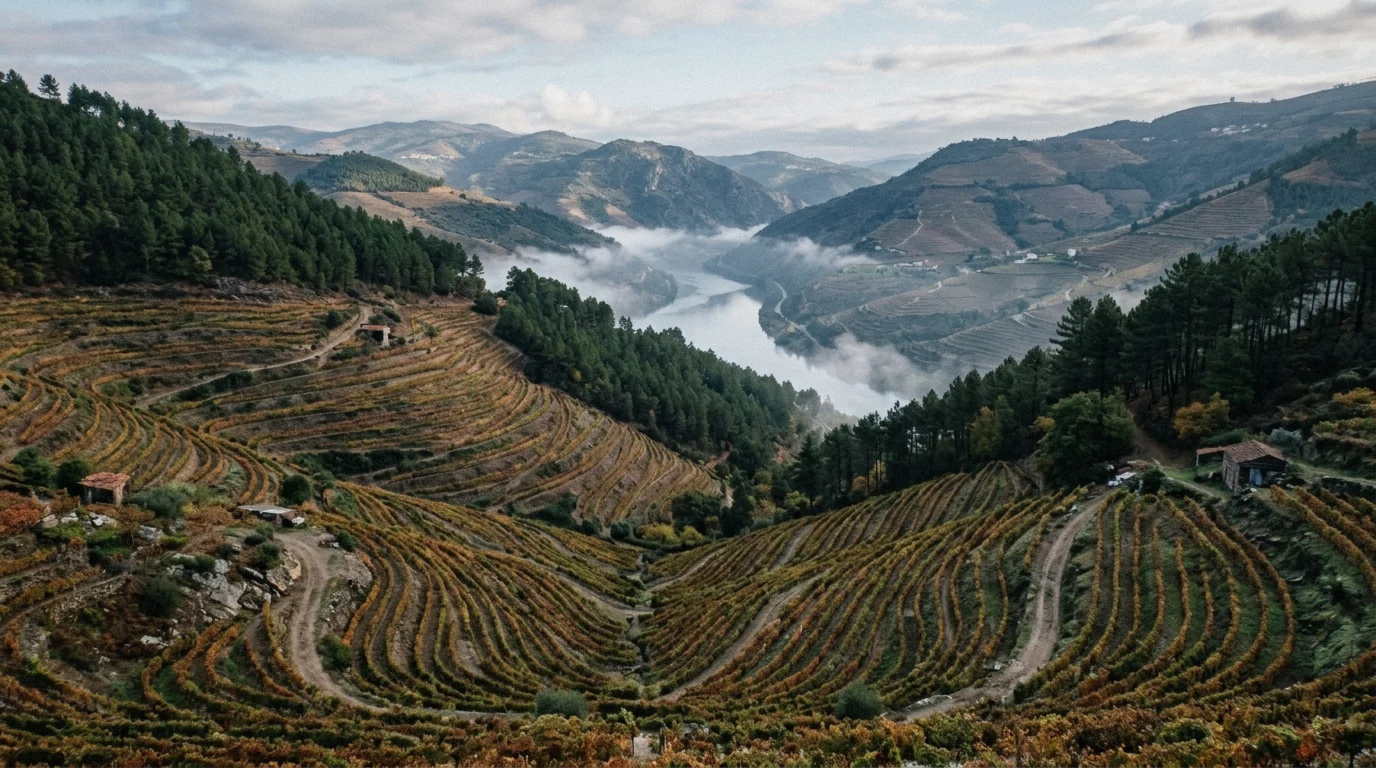
The terraces are hand-built schist walls. For many visitors the landscape alone justifies the trip.
Quick answer The landscape, the port monopoly and the surviving craft, in brief
The Douro Valley pulls three levers at once. It is a UNESCO World Heritage site and the world's oldest demarcated wine region. It is the only place authorized to produce authentic port. And it still works the old way: grapes hand-picked on the terraces and foot-tread in stone lagars. Add rabelo boat cruises, long winery lunches and viewpoints such as Casal de Loivos, and the trip mostly arranges itself once you settle the the best time for a Douro Valley wine tour.
Key takeaways
- Scenery first: steep, twisting riverbanks and terraced vineyards carved into the hills of the so-called enchanted valley
- Heritage second: authentic port exists nowhere else, and the railway and the N222 are attractions in their own right
- Craft third: hand-picking and foot-treading survive at working quintas, and the harvest guide explains the season
- Already sleeping in Pinhão? The half-day cruise and Croft tasting compresses the highlights into three hours
Three Reasons People Pick This Valley
Ask returning visitors and the same three answers come back, in slightly different orders.
The landscape people call enchanted
The valley's nickname among Portuguese travellers is the enchanted valley, and it is earned: steep, twisting riverbanks with vineyard terraces carved laboriously into the hillsides, wall after wall of schist dropping to slow green water. Few wine regions put the view first and the wine second, and this is one of them. Tourist information on the region is collected by the national tourism board at visitportugal.com, and even their material leads with the landscape.
A monopoly you can taste
This is the only place in the world authorized to produce authentic port, and the region as a whole is a UNESCO World Heritage site. That matters for a trip in a practical way: the famous cellars, the vintage years and the style families from ruby to 40-year tawny are not experiences you can reschedule to another country. What the Douro grows, only the Douro grows.
Craft that never left
Many estates still work centuries-old methods. Grapes are hand-picked on slopes no machine could work, and in harvest season they are still foot-tread in stone lagars. This is not museum agriculture either: the same hands that pick the fruit make the wine from it, and the winemaker is often a few metres away during the tasting.
That proximity is rare anywhere in wine and normal here.
The valley at a glance
The claims above compress into a short table. Figures are the ones used across this site's tour pages, read from the listings and official sources.
| What draws travellers | The fact | Where it shows up |
|---|---|---|
| Oldest demarcated wine region | Demarcated in 1756, UNESCO-listed landscape | Every tour's guide commentary |
| Port wine's birthplace | Fermented at 19 to 20% ABV, styles from ruby to vintage | Second-estate tastings |
| The river perspective | Rabelo cruises from 45 minutes to 2h15 | Most listings in the catalog |
| Working harvest | Grape picking and foot-treading, late August to October | Harvest-season tours and the season guide |
| Drive and rail scenery | The N222 and the Linha do Douro riverside railway | Boat-and-train day and the DIY guides |
The Journey Counts as Sightseeing
In most wine regions the transfer is dead time. In the Douro it is half the reason to come, by road or by rail.
The N222 between Régua and Pinhão
The stretch of the N222 between Peso da Régua and Pinhão is often called one of the world's most beautiful roads, running directly among the terraces with exceptional views the whole way. Tour routes drive it with photo stops at the marked viewpoints, and driving it in both directions, as most tours do, is part of the design rather than a detour.
The Linha do Douro railway
The historic railway runs directly alongside the river and offers the cheapest scenic perspective on the valley, a budget-friendly ride through terrain that would otherwise demand a car. Timetables live at the national operator, cp.pt, and the practical details of combining rail with a tour day are worked through in how to get from Porto to the Douro Valley. Many travellers ride the train one way and return by road or river on purpose.
Pinhão station's 24 azulejo panels
Pinhão's train station is a must-see in its own right: 24 azulejo tile panels depicting the region's traditional winemaking history, from the harvest to the river boats. It is also the quay the cruises leave from, which makes the station the rare sight that sits exactly on your itinerary rather than beside it.
Road, rail or both
The journey works by road or by rail, and the moments along the way are unmissable in either direction. The road gives you the N222's terrace walls at eye level and the viewpoints, the train gives you the river at water level without anyone watching the road. The strongest itineraries refuse to choose: road out, river cruise in the middle, and the railway's rhythm on the way home, which is why so many Douro days are built as loops rather than out-and-back trips.
Towns, Quintas and the Cellar
Between the viewpoints and the tastings, the Douro trip is stitched together by small towns and two very different kinds of estate.
Two towns that break the drive
Most guided tours include a stop in a historic town to break up the route. Amarante is known for the Church of São Gonçalo and its iconic, uniquely shaped traditional pastries, and it is the one valley-adjacent town a tour actually reaches from Porto: the Amarante day with private cruise and tapas is built around it. Lamego, deeper in the valley, is famous for its monumental baroque staircase climbing to the Sanctuary of Nossa Senhora dos Remédios.
Why two quintas beat one
A Douro day is incomplete without visiting at least two different styles of estate. The contrast of flavours is the point: experts suggest one quinta focused on port wine and another on Douro DOC table wines, the non-fortified side, to appreciate the region's full range in a single day. One estate, however good, shows you one half of the valley.
The lagar and the old barrels
Two cellar details stay with people. The first is the lagar, the traditional stone tank where grapes are still stomped by foot at harvest, which many visitors name as the highlight of the whole trip. The second is barrel tasting: pouring aged port directly in the cellar, or stepping inside a massive 170-year-old barrel, is about as direct a connection to the region's history as wine offers.
The River, the Lunch and the Viewpoints
Three experiences carry almost every well-reviewed Douro day, and they reinforce each other.
Rabelo boats on midday water
Taking to the water is essential to appreciate the verticality of the vineyards, and it is where the valley's history is most visible: rabelo boats once transported wine barrels downriver, and now they offer peaceful 1-to-2-hour cruises through the same bends. From the river you can spot the large signs of the world-famous estates perched on the hills, the ones you cannot read from the road.
The winery lunch as a ritual
Food is a central part of the Douro experience, often described as a ritual of sharing. The meals worth booking are sit-down affairs featuring regional specialties: bacalhau, the salted cod, cabrito assado, roast goat, or pork knuckle, and most winery lunches pour house wine with them, often without a ceiling. An hour and a half at a quinta table is not a break from the tour, it is the tour.
Two viewpoints worth asking for by name
Strategic stops at miradouros, the viewpoints, are where the photos happen. Casal de Loivos is widely considered one of the best views in Portugal, looking straight over a major bend in the river. The Miradouro Escritor Miguel Torga is the common stop for capturing the panoramic scale of the valley.
If a listing promises viewpoints without naming any, those two are the test.
Match the Day to What Pulled You Here
If The landscape is the draw
Any full day with the N222 and a named viewpoint stop covers it
If Port history is the draw
Pick a day that pairs a port cellar with a DOC table-wine estate
If The river is the draw
Make sure the cruise runs an hour or more, ideally from Pinhão's quay
If Food is the draw
Choose a premium small-group day with pairings and a long estate lunch
If Harvest is the draw
Book September or October and confirm grape picking is actually included
The Case for the Douro, Stated Plainly
What we genuinely like
- The scenery is the product: UNESCO-listed terraces you see from the road, the train and the boat in a single day
- Port exists nowhere else authentically, and good days pour it beside the dry DOC wines from the same slopes
- The journey itself, the N222 and the riverside railway, would justify the trip without a single tasting
- Working craft is visible, not reconstructed: hand-picking and foot-treading happen at harvest on the terraces you just photographed
- One booking bundles the three experiences, cruise, lunch and tastings, that other regions sell separately
The honest downsides
- Listings vary widely, so the lagar, the viewpoints and the cruise need checking tour by tour rather than assumed
- Harvest extras such as grape picking only run in September and October, which concentrates demand into a few weeks
- The valley is steep and the roads wind, so every day involves real driving or riding between stops
- Summer heat can flatten the midday hours on the open terraces
Who it's NOT for: Travellers who want walkable wine country where the cellar is next to the hotel: the Douro's distances and slopes mean every day rides something, whether road, rail or river.
If You Come in Harvest Season
The harvest weeks are the valley at full volume, and they change what a good tour should include.
What to make sure the tour includes
If you are buying a tour during harvest season, check for two things specifically: grape picking, done side by side with local families on the terraces, and the lagarada, the actual party and process of pressing grapes by foot in the traditional presses. A harvest tour without those two is a normal tour with better light.
Why those dates sell out first
The working quintas only run the picking and the lagarada while the fruit lasts, so the seats that include them are the scarcest in the calendar. Booking those weeks early is not upselling, it is the only reliable way in, and the month-by-month detail lives in the harvest season guide.
What the harvest version of a day looks like
A harvest day keeps the standard spine, viewpoint stop, quinta visit, cruise or lunch, and bolts the season onto it: morning picking among the rows with local families, then the lagarada, where the pressed fruit becomes the party. Travellers who time the trip for the harvest consistently describe it as the version of the valley they recommend hardest, precisely because they did something rather than only looked at something.
The valley rewards return visits
Travellers who come for one day tend to plan the second visit on the drive home: the harvest they missed, the upper valley beyond Régua, the quinta they tasted and promised themselves a case of. That repeat magnetism is the honest answer to why people choose the Douro, and the month-by-month planner is where the second trip usually starts.
How the Highlights Bundle Into One Booking
Every reason on this page needs a vehicle, and the tour market answers with three day formats worth telling apart.
The comprehensive day
The longest format, around ten hours door to door, is the one most travellers mean by a Douro day: winery visits with tastings, a proper sit-down lunch and the river cruise, connected by the scenic road with viewpoint stops. It is the format to choose when the landscape, the port heritage and the river all made your shortlist, which for most first-time visitors they did.
The food-first day
A second format organizes the day around the table rather than the cellar: culinary excellence and diverse tastings, with port-and-cheese pairing sessions, olive oil along the way and a long estate lunch as the centrepiece. It suits travellers whose reason for coming was the ritual of the Douro table as much as the wine.
The education day
The third format is ideal for travellers looking for deeper wine education: a day run by wine professionals rather than drivers, pouring far more wines and explaining the styles, the grapes and the ageing as it goes. For anyone whose reason number one was understanding port properly, this is the day that pays the trip back, and the sommelier-format day in our catalog is exactly that booking.
Quick Tips That Buy Better Days
Small decisions that cost nothing on booking day and pay back on the road.
The tips regulars pass around
None of these appear on checkout pages, and all of them come straight from travellers and locals. They cost nothing at booking time and each one changes a real hour of the day for the better.
- Seating tip: on a bus out of Porto, sit on the right side for more consistent river views during the drive
- Non-drinkers take note: the valley is still worth it for the scenery, the boat rides and the high-quality cuisine
- Cooling hack from locals: keep grapes in the freezer and use them as ice cubes, they chill the wine without diluting it
- Check the cruise length and the lunch format at checkout, not the tour name, because similar-sounding days hide different inclusions
- Book any harvest-week departure as early as the calendar allows, because the picking and lagarada seats are the first to go
One day, and the shape of it
For most travellers the decision is not whether to go but how to spend the one day available. The comparison table on the homepage collapses the sixteen listings into five shapes, and the shape-of-your-day guide argues the trade-offs. Start there, then read the season pages if the dates are still open.
Why People Choose the Douro: FAQ
Which side of the bus should I sit on from Porto?
The right side. Travellers who take the bus from Porto consistently report more river views from the right-hand seats during the drive out, while the left side faces the hills for longer stretches. It costs nothing to choose at boarding and it changes hours of the day.
Is the Douro Valley worth it if you do not drink wine?
Yes. The case for the valley has never been only the glass: the scenery, the boat rides and the high-quality cuisine carry the day on their own. Non-drinkers still get the terraces, the N222, the river perspective and a long lunch at a working quinta.
What exactly is a lagarada?
The lagarada is the actual party and process of pressing grapes by foot in the traditional stone presses, held during harvest season. It is part festival, part work, and it is the most direct contact a visitor can have with the winemaking the region is famous for.
How long is a rabelo boat cruise?
The traditional boats, which once carried wine barrels downriver, now run peaceful cruises of roughly 1 to 2 hours. On tour days from Porto the standard sailing is a one-hour loop from Pinhão's quay through one of the widest terrace walls on the river, and longer sailings exist from Régua.
Which viewpoints should a good tour include?
Ask for Casal de Loivos, widely considered one of the best views in Portugal over a major river bend, and the Miradouro Escritor Miguel Torga, the stop that captures the panoramic scale of the valley. A listing that names neither is telling you something about its route.
Why do experts suggest visiting two different quintas in one day?
Because the valley produces two different wine families on the same soil. One estate focused on port and another focused on Douro DOC table wines shows the full range of the region in a day: fortified against dry, sweet against structured. A single quinta, however excellent, only ever shows half the story.
What is the enchanted valley?
It is the nickname Portuguese travellers give the Douro, for its steep, twisting riverbanks and the vineyard terraces carved laboriously into the hills. The name is descriptive rather than marketing: the landscape reads as almost improbable from the water, which is why the river cruise and the viewpoint stops earn their place on every good itinerary.